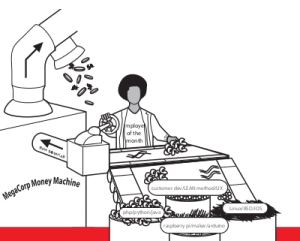
Money Machines are small computer, craft, or technical business which employ no more than 3 full time employees. This type of firm normally consists of a solo practitioner or a couple of cofounders who are pursing a business venture based on a technical “itch” that needs scratching. This term was first used in this manner by engineer, author and entrepreneur Don Lancaster – The Tinaja Project and William “Bill” Gates his Midnight Engineering Publication endeavors.

The vast majority of innovative tech companies began this way – Google, Microsoft, Hewlett-Packard, etc. There are times when Money Machines scale and go on to employee many people but during their formative years it is often an understanding of day-to-day tactics that end of ruining these businesses. Historically founders of Money Machines type startups “AVOID Like The Plague” the business pitch/prize, seed and venture type funding “CHITLIN CIRCUITS” that are popping up across the country and the globe but rather seek out a type of funding that is the most crucial to their entrepreneurial success – credit card swiping, crypto-coin transferring, checking writing, cash on the barrel PAYING CUSTOMERS!! By following this path and trek venture capitalists, angel investors and investment managers end up chasing down the money machine and its founder rather than the other way around.
Our Money Machine Initiative works to address this set of challenges through teaching founders of small STEAM(science, technology, engineering, arts, mathematics) based startups the science and business methodologies around
• Customer/User Discovery, Development and Experience Tracking
• Funding their business operations primarily and at times exclusively through customer revenue
• The principles of “Permissionless Entrepreneurship”
• Founders understanding their entrepreneurial temperament profile which seriously aids in team building and collaboration
• Building a network or consortium of fellow Money Machine founders which aids their respective firms to address scope broadening and scale while minimizing risk during the early life cycle of their business ventures.